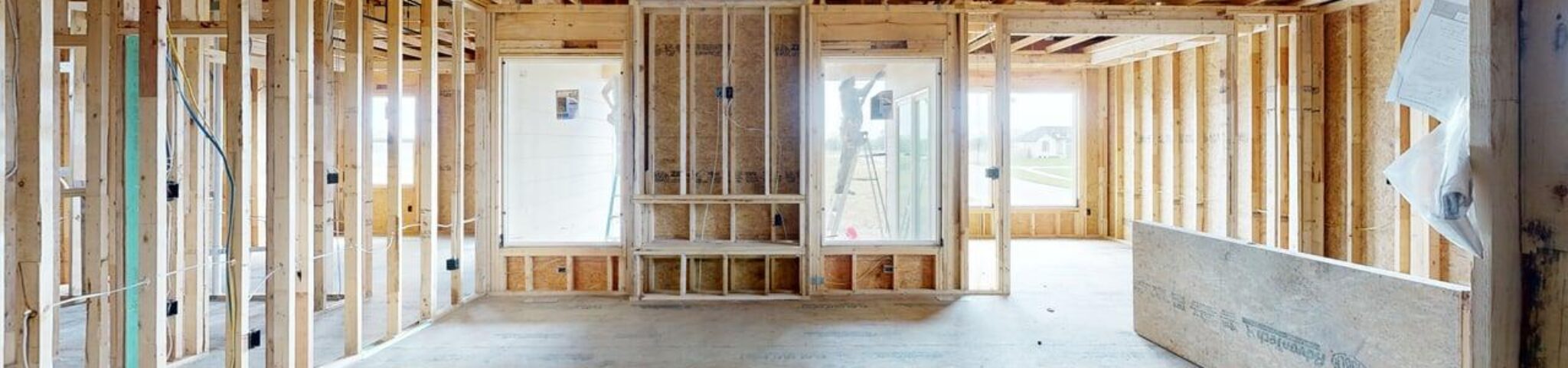
Residential Construction Science 101: Part 3 – Load Paths: How a House Carries Weight
A learning series created by the Paul Gray Homes team of residential construction experts.
This series is designed for construction students and early-career professionals who want to understand how residential structures actually work. Whether you’re studying drafting, construction science, or project management, these lessons connect classroom concepts to real-life homebuilding in Wichita and the South-Central Kansas region.
Introduction: Why Load Paths Matter in Residential Construction
Every home carries and transfers weight—from the roof to the soil below.
Understanding how that load travels is essential for:
- structural safety
- long-term durability
- preventing cracking, sagging, and shifting
- smarter framing decisions
- better communication with engineers and inspectors
A load path is simply the route that weight takes as it moves through a house and into the ground.
When the load path is continuous and well-supported, the home performs well.
When it’s interrupted, poorly aligned, or improperly framed, problems begin.
The Three Types of Loads in Residential Homes
Residential structures deal with three main load types:
1. Dead Loads (Weight That Never Changes)
Dead loads include:
- framing lumber
- roofing materials
- drywall
- flooring
- sheathing
- fixed equipment
These loads are constant and predictable, making them a structural baseline.
2. Live Loads (Weight That Changes Over Time)
Live loads include:
- people
- furniture
- snow accumulation
- storage in attics
- appliances added later
These loads vary and must be accounted for in both framing and design.
3. Environmental Loads (Weather + Forces on the Structure)
Environmental loads include:
- wind forces
- seismic movement (minimal in Kansas but still considered)
- soil movement
- thermal expansion and contraction
These loads often place lateral (sideways) pressure on the home, which must be resisted through shear walls, bracing, and proper connections.
How Load Paths Travel Through a Home
Every home transfers weight downward through a series of connected components.
A complete load path includes:
- Roof →
- Roof trusses or rafters →
- Bearing walls →
- Beams and joists →
- Floor system →
- Posts or columns →
- Foundation →
- Soil
If any part of this chain is weak or discontinuous, structural issues appear.
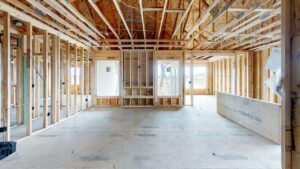
Loads travel through roof systems, walls, beams, and foundations before reaching the soil. A continuous load path ensures long-term structural performance.
Common Load Path Problems in Residential Construction
1. Misaligned Bearing Walls
If an upper-level bearing wall sits above a non-bearing wall below, loads won’t transfer properly.
2. Cut or Notched Trusses or Joists
Weakens structural members and disrupts the intended load route.
3. Over-spanning Beams or Joists
Insufficient support can lead to bounce, sagging, or structural failure.
4. Missing or Improper Posts
Especially under stair openings, large window openings, or ridge beams.
5. Incomplete Connection Hardware
Missing straps, anchors, hangers, or bolts compromise load transfer.
6. Foundation Settlement
If soil shifts or compresses, all the loads above shift with it.
How Paul Gray Homes Ensures Strong Load Paths
At Paul Gray Homes, our construction experts apply detailed load path knowledge to every project across Wichita and South-Central Kansas.
We:
- align bearing walls through all levels of the home
- size beams and posts properly based on loads
- coordinate with engineers for high-performance design
- use advanced hardware and bracing for stability
- protect the structure from moisture, which weakens load paths over time
- build on properly prepared foundations to ensure soil stability
You can see examples of this craftsmanship in our available homes.
Glossary — Key Terms From This Lesson
Load Path
The route weight takes as it moves from the top of a home down to the ground.
Bearing Wall
A wall that supports structural weight from above.
Live Load
Weight that changes (people, furniture, snow).
Dead Load
Permanent weight (materials, structure).
Shear Wall
A wall designed to resist lateral (sideways) forces like wind.
Point Load
A concentrated load transferred to one location, often onto a post or beam.
Internships for Students
Students studying construction, drafting, or project management can gain real-world experience through internships at Paul Gray Homes.
Available hands-on roles include:
- Drafting & Residential Plan Design
- Project Management & Field Coordination
To connect with us directly:
👉 Contact Paul Gray Homes
How Students & Instructors Can Use This Series
- Students: Use this series to reinforce classroom concepts with field-ready knowledge.
- Instructors: You may reference or link to this series in your construction science curriculum.
What’s Next in the Series
Residential Construction Science 101 Series
- Part 1: What Is Residential Construction Science?
- Part 2: The House as a System
- Part 3: Load Paths – How a House Carries Weight (you are here)
- Part 4: Thermal Bridging – Where Homes Lose Energy (coming next)
About Paul Gray Homes
Paul Gray Homes is a leading residential builder in Wichita and the South-Central Kansas region, specializing in high-performance, energy-efficient homes. Our science-first building approach ensures long-term comfort, durability, and value.
We also offer internships in drafting and project management for students and early-career professionals.
For more information, visit our contact page.
Connect with Us:
