
Why Fall is Quietly the Best Time to Start New Home Construction in Wichita, Ks
If you have been thinking about building, you have probably assumed spring is when things get started. Most people do, and at Paul Gray Homes we understand why. But Paul Gray grew up on jobsites before founding this company in 2007, and enough Kansas seasons have taught us that the calendar for new home construction in Wichita KS works differently than it looks from the outside. Fall is one of the strongest windows we get — for the ground, for the crews, and for your timeline. Here is why breaking ground in September, October, or November tends to give you a smoother build and an earlier move-in than waiting for spring.
Fall Gives New Home Construction Wichita KS the Best Ground Conditions
Everything in a build starts with dirt, and Kansas dirt has opinions. Our clay soil holds water, and after a good spring rain it does not just get wet — it becomes unworkable for days at a time. Crews cannot excavate it, cannot compact it, and cannot pour on it.
In most years, spring is the hardest sitework season we have. A schedule built around March and April has to assume real weather loss, and that loss shows up as calendar days you never get back.
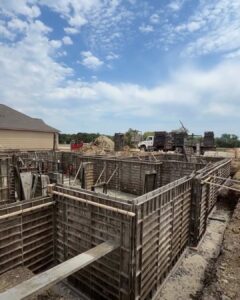
Fall usually runs the opposite way. Soil has had a long dry stretch to firm up, temperatures are moderate, and the ground has not started freezing yet. Excavation moves faster, footings go in clean, and concrete cures at the temperature it actually wants to cure at — no blankets, no heated enclosures, no accelerating admixtures, none of the added cost that comes with a January pour.
Crews Have Room on the Calendar
The second advantage is one buyers almost never think about: who is available. Every builder in the region is trying to get foundations in and homes framed during the spring and summer rush. Excavators, concrete crews, and framers are all stacked with work, and a single delay early in the chain pushes everything behind it.
By fall, that pressure eases. The subcontractors who make or break a schedule have more open dates, which means fewer gaps between phases and less time with a project sitting still.
There is a quality dimension here too, and it matters more than the scheduling one. A trade crew running three jobs instead of seven gives your home more attention. That shows up in the finish work long after the build is done.
Material Pricing Follows the Building Season
Lumber is a seasonal market. Prices tend to run toward their annual highs in spring and early summer, precisely when everyone is framing at once, and they typically soften as the building season winds down.
The broader picture heading through 2026 has been volatility rather than a clean trend in either direction, with tariffs on Canadian softwood and reduced North American mill capacity keeping steady upward pressure on costs. Framing lumber has been running meaningfully above pre-2020 levels, and industry cost data shows it moving in both directions quarter to quarter.
That volatility is the argument for starting sooner rather than later. Nobody can promise you a specific price on a specific week. What a fall start does is get your framing package specified and ordered before the spring demand cycle turns back up — and in an unpredictable market, timing your order against the season is one of the few levers anyone actually controls. Gordian’s quarterly lumber cost data tracks these swings if you want to follow the numbers yourself.
Winter Work Happens Indoors
Here is the part that makes the whole thing click. Once a home is framed, roofed, and dried in, the weather stops mattering nearly as much.
Through December, January, and February, your build keeps moving — mechanical rough-in, insulation, drywall, cabinets, trim, paint, flooring, tile. All of it happens under a roof, on a heated jobsite, on a schedule that a Kansas cold snap barely touches.
A fall groundbreaking uses the good weather for the work that needs good weather, then spends the hard months on work that does not care. That is the whole strategy, and it is why experienced builders quietly prefer it.
If you want to see how those phases actually stack up, our How Your Home is Built guidebook walks through each one, from site preparation and foundation work through framing, mechanical systems, insulation, and final finishing. It is part of a wider guidebook library we built for exactly this reason: most people only do this once or twice in a lifetime, and the questions deserve real answers before anyone signs anything.
What New Home Construction Wichita KS Looks Like on a Fall Timeline
Run the math and the appeal gets obvious. A custom build with us typically runs six to twelve months from groundbreaking to keys, depending on the size and complexity of your home.
But the build clock is not the only clock. Before a shovel touches the ground, we design your plan, work through structural and mechanical decisions, finalize the contract and financing, and get through selections. That runway is measured in weeks and months, not days.
Which means a conversation that starts in August is a fall groundbreaking. Wait until the leaves actually turn to make the call, and you are looking at a spring start instead — with all the mud that comes with it.
Break ground in September or October on a mid-range plan and you are looking at a late spring or early summer move-in — ahead of the school year, in the best weather of the year for getting settled, with your landscaping going in during the season it will actually take root.
Wait until spring to start, and you are fighting mud on the front end and moving in around the holidays on the back end. Same house. Same budget. A meaningfully different experience.
Building With a Team That Knows the Season
At Paul Gray Homes, new home construction Wichita KS is year-round work, and we plan schedules around what Kansas weather actually does rather than what the calendar says it should do. That local read is often the difference between a timeline that holds and one that slips a season. If you want to see how the whole process fits together before you commit to a start date, our step-by-step guide to building your custom home walks through all eight stages, from the first design meeting to the day we hand you the keys.
Schedule a free consultation with our team and let us show you what is possible on your lot.
Start at paulgrayhomes.com/build-your-home or reach us directly at sales@paulgrayhomes.com.